The Devils Walking Stick: A Unique Woodland Species
Intro
The marvel of forests goes beyond lush canopies and chattering wildlife—it holds tales tucked away in its undergrowth. One such tale is about the Devils Walking Stick, a distinctive plant, with spiny stems and lush leaves, that finds its home in the woodlands of Eastern North America. As we navigate through this exploration of Aralia spinosa, we uncover not only its biological traits but also its vital role in the ecosystem.
Understanding the significance of the Devils Walking Stick isn’t just for botany enthusiasts; it transcends to every individual who values our natural heritage. The plant's texture and form provide habitat for various creatures, while its use in traditional medicine speaks to a long-standing relationship between people and the land. So, let's roll up our sleeves and delve into the ecological importance, practical uses, and cultural facets of this captivating species.
Understanding Woodland Ecosystems
Woodland ecosystems are intricate networks where every organism plays a role.
Importance of Biodiversity in Forests
Biodiversity stands as the backbone of healthy forests. It isn’t merely about a rich variety of species; it’s about how they interact and sustain each other. The Devils Walking Stick exemplifies this dynamic well:
- Habitat Provider: Its broad leaves provide shelter for pollinators.
- Food Source: The flowers that bloom attract a range of insects, becoming a feast for them and supporting the food web.
- Soil Health: The roots dig deep, preventing erosion and enriching the soil when they decay.
This interplay emphasizes why preserving species like the Devils Walking Stick is crucial. Each loss reverberates throughout the ecosystem, causing a ripple effect.
Role of Forests in Climate Regulation
Forests play a significant role in regulating Earth’s climate, acting as sponges for carbon. Through photosynthesis, plants like the Devils Walking Stick contribute to absorbing carbon dioxide, thus helping mitigate climate change. The dense foliage not only traps carbon but also provides shade, cooling the air beneath. As a result, these woodlands maintain not just local climates but global ones too.
“Forests are the lungs of our planet, breathing life into every corner of our globe.”
Sustainable Forestry Practices
For the longevity of our woodlands, sustainable forestry is imperative. It means managing forest resources to meet current needs without compromising future generations.
Principles of Sustainable Forestry
Sustainable forestry incorporates:
- Selective Harvesting: Only certain trees are felled while maintaining the overall health of the woodland.
- Continuous Monitoring: Regular assessments ensure that practices are effective and adapt to changes.
- Community Engagement: Local input in management decisions fosters stewardship and a sense of responsibility.
Case Studies of Successful Implementations
One noteworthy case is the sustainable practices found in the forests of the Appalachian region. Here, landowners have collaborated with environmental organizations to implement methods that not only protect the ecosystem but also enhance it. Such partnerships demonstrate that people can be part of the solution, fostering balance between economic needs and ecological health.
Woodland Stewardship Techniques
To further fortify the health of our forests, effective stewardship techniques must be executed.
Forest Management Plans
A well-structured forest management plan acts as a roadmap for landowners. It outlines objectives, whether they be about timber production, recreational use, or habitat conservation. The inclusion of the Devils Walking Stick in such plans not only addresses species health but benefits entire ecosystems.
Conservation Strategies
Conservation is all about preserving what remains of our biodiversity. Techniques could include:
- Protecting native species: Initiatives to reintroduce or nurture native flora like the Devils Walking Stick bolster overall forest resilience.
- Restoration of habitats: Efforts to rehabilitate areas heavily impacted by human activity can establish healthier ecosystems, fostering a return of both flora and fauna.
As we survey these strategies, the overarching message remains clear: the Devils Walking Stick, along with countless other species, serves as a reminder that every element in the woodland contributes to a larger symphony of life. By understanding and implementing these practices, we not only safeguard a mere plant but nurture an entire ecosystem.
Foreword to the Devils Walking Stick
The Devils Walking Stick, known scientifically as Aralia spinosa, garners considerable interest due to its unusual characteristics and significant ecological role in the forests of Eastern North America. With its eye-catching form and multifaceted contributions to woodland ecosystems, understanding this species offers valuable insights for forestry professionals and ecologists alike. Its distinctive spiny structure, towering height, and rich growth habits showcase an adaptability that not only survives but thrives under various conditions.
This introduction seeks to highlight how the Devils Walking Stick stands out in its environment, providing food and habitat for numerous wildlife species. In an era where biodiversity is increasingly threatened, recognizing the importance of such species is vital for conservation efforts. Furthermore, the artistic elements of its form and foliage can stimulate discussion about aesthetic appreciation in nature. The intersection of its practical applications with traditional medicinal uses beckons further exploration, emphasizing the importance of ecological knowledge in land management and sustainable practices.
For those immersed in forestry or ecological research, the Devils Walking Stick presents itself as a compelling subject of study. By shedding light on its various biological traits and the ecological tapestry within which it resides, we can foster a deeper appreciation for this fascinating species.
Common Characteristics
The Devils Walking Stick can be identified through a series of striking features. Typically, it reaches heights of up to 10 feet, with a coarse, spiny trunk that makes it hard to overlook. The leaves are large and compound, often measuring over a foot long, often arranged in an irregular pattern that creates a striking canopy above.
In addition, the plant showcases clusters of small, white flowers that bloom in late summer. These flowers are not only aesthetically pleasing but also serve as a vital resource for pollinators. After flowering, the berries emerge, which are sought after by various bird species and other wildlife, forming an important part of the food web.
- Height: Can grow up to 10 feet tall
- Trunk: Spiny and coarse, providing a distinct appearance
- Leaves: Compound, often larger than a foot in length
- Flowers: Small white clusters, blooming late summer
- Fruits: Berry clusters consumed by wildlife
Taxonomy and Classification
Delving into the taxonomy of the Devils Walking Stick, we find that it belongs to the Araliaceae family, which comprises several other notable species. This family is characterized by its diverse plant forms, ranging from herbaceous plants to robust trees. A closer look reveals that Aralia spinosa is closely related to the ginseng family, underscoring its evolutionary connections with plants commonly utilized for their medicinal properties.
Its classification can be broken down as follows:
- Kingdom: Plantae
- Clade: Angiosperms
- Clade: Eudicots
- Clade: Asterids
- Order: Apiales
- Family: Araliaceae
- Genus: Aralia
- Species: A. spinosa
Understanding its taxonomy not only aids in the identification of the species but also provides crucial insights into its ecological relationships and potential pharmacological applications. As a member of the Araliaceae family, the Devils Walking Stick contributes to a broader understanding of the interactions and diversity within woodland ecosystems.
Habitat and Distribution
Understanding the habitat and distribution of the Devils Walking Stick is crucial for grasping its ecological role and the potential consequences of its decline in various ecosystems. This species thrives in specific environments that not only support its growth but also the myriad of organisms that depend on it.
Natural Habitat Preferences
The Devils Walking Stick prefers well-drained soils, often found in areas that have a mix of sunlight and shade. These preferences are typically observed in regions characterized by moist, loamy soil, which can hold enough water yet promotes drainage.
This plant tends to favor deciduous forests, especially those that are in the transitional stages of regeneration after disturbances such as fire or logging. In these ecological niches, it can flourish, reaching heights of up to 10 feet under optimal conditions. The key conditions it demands can be summarized as follows:
- Light Requirements: Partial shade to full sunlight is ideal. It often grows along the edges of wooded areas where direct sunlight penetrates.
- Soil Type: Prefers moist yet well-drained soils rich in organic content. Frequent flooding or compacted soils can stifle growth.
- Moisture Levels: Adequate moisture is vital, as this plant is more drought-sensitive than many other understory species.
These preferences make the Devils Walking Stick a strong indicator of healthy woodland ecosystems. Its presence often suggests the availability of suitable habitat features for various wildlife species.
Geographic Distribution
The geographic range of the Devils Walking Stick spans primarily through the eastern regions of North America. You can find it from Texas up to Pennsylvania, extending eastward to parts of New England. This broad range hints at its adaptability within various microclimates and soil types.
In terms of specific distribution:
- Southeastern U.S.: This area shows the densest populations, thriving in diverse habitats from the swamplands to rolling hills.
- Mid-Atlantic States: Here, it can be seen populating forest edges and underbrush, edging into urban areas where suitable conditions arise.
- Northern Limits: While it extends into New England, it is less common in areas with harsher winters.
The adaptability of the Devils Walking Stick to different woodland ecosystems not only solidifies its role in local biodiversity but also raises alarms about how its distribution might shift amid changing climate patterns. As environments undergo transformation, conservation strategies need to recognize and preserve this unique species across its evolving range.
"The power of the Devils Walking Stick can be seen as more than just a plant; it represents a vital thread in the ecological tapestry that supports diverse wildlife in woodland areas."
In summary, the habitat preferences and geographic distribution of the Devils Walking Stick are intimately connected with the broader ecological dynamics of the regions it inhabits. Understanding these aspects is pivotal for anyone interested in the conservation and management of woodland species.
Morphological Features
The morphological features of the Devils Walking Stick plant, Aralia spinosa, serve as critical indicators of its adaptability and ecological role within woodland environments. Understanding these characteristics is essential for forestry professionals and academic researchers, as they provide insights into how this species thrives in its native habitats. Not only do these traits contribute to the plant's ability to interact with its surroundings, but they also highlight its significance in promoting biodiversity.
Understanding Stems and Branches
The stems of the Devils Walking Stick are remarkable not just for their height but also for their texture and structure. Typically, they can grow between 10 to 15 feet tall, often taking on a somewhat tree-like form despite being a shrub. Its stems are often covered with a series of spines that serve multiple purposes:
- Deterrent Against Herbivores: The spines discourage browsing by larger animals, ensuring the plant's survival and growth.
- Structural Support: These sturdy stems allow the plant to withstand strong winds and support its expansive foliage and flowers above.
When examining the branching patterns, one notes that they tend to be coarse and spaced far apart. This open structure not only permits light penetration but also fosters a habitat for small wildlife, thus enhancing ecosystem interaction.
Foliage Characteristics
The lush leaves of the Devils Walking Stick are quite large, often measuring up to a foot across. Their presence is vital for a number of reasons:
- Photosynthesis: The size enables efficient photosynthesis, which is crucial for the plant to generate the energy needed for growth.
- Microclimate Creation: The broad leaves help create a cooler microenvironment both for the plant itself and for smaller creatures that take refuge beneath them.
- Seasonal Variability: The foliage transforms with the seasons, changing from vibrant green in summer to shades of yellow and brown in autumn, adding aesthetic value to the habitat.
These variable leaf characteristics not only illustrate the plant’s adaptability but also influence the soil and microhabitat on which other species rely.
Floral Structures and Pollination
The floral structures of the Devils Walking Stick showcase a fascinating aspect of its morphology. Flowers appear in large, attractive clusters during the late summer months, offering a striking contrast to the surrounding greenery. The white blossoms attract a variety of pollinators, such as bees and butterflies, which play a crucial role in its reproductive cycle.
- Pollination Mechanism: The plant relies on these pollinators to facilitate cross-pollination, enhancing genetic diversity within the species.
- Fruit Development: Post-pollination, clusters of dark purple berries develop, providing food not only for avian species but also for various mammals.
"The interactions between the Devils Walking Stick and its pollinators illustrate a finely tuned ecological relationship, crucial for sustaining woodland biodiversity."
These morphological features, from the sturdy stems to lush foliage and flowering structures, underpin the ecological importance of the Devils Walking Stick. Each aspect contributes uniquely to its resilience and the broader woodland ecosystem.
Ecological Role
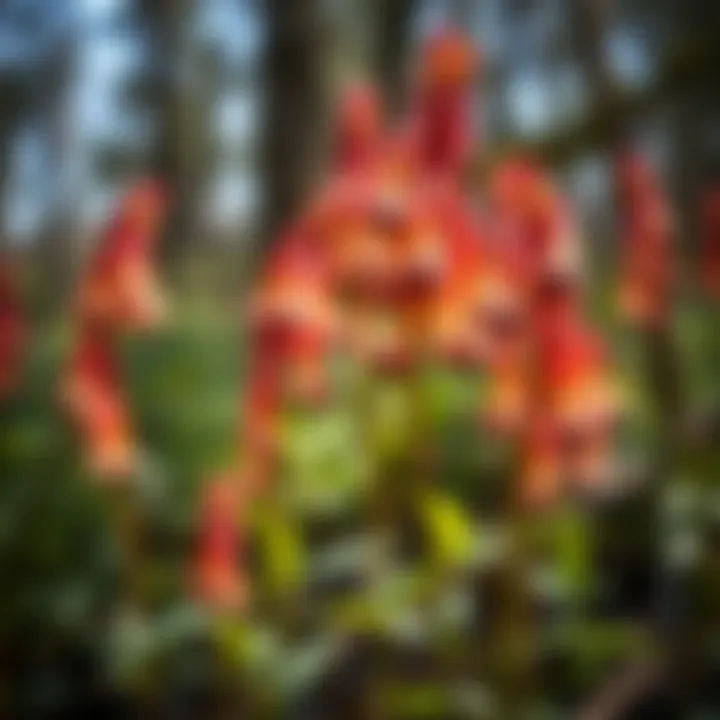
The ecological role of the Devils Walking Stick is significant in maintaining the balance of woodland ecosystems. Its unique characteristics not only provide habitat for various species but also contribute positively to soil health. Understanding these roles highlights the importance of preserving this unusual flora, which may sometimes seem less recognized compared to more prominent species in Eastern North American woodlands.
Support for Wildlife
The Devils Walking Stick is far more than just a plant; it is a critical resource for numerous wildlife species. The dense thickets formed by this plant provide shelter and nesting areas for birds and small mammals. Many birds find refuge in its spiny branches, which deter predators, making it an effective sanctuary. Moreover, the plant's flowers attract pollinators, such as bees and butterflies, contributing to the broader ecosystem's health and growth.
Let's explore some of the specific interactions:
- Bird Species: Species like the Eastern Towhee and various sparrows utilize the plant for nesting. The thick growth offers protection during their critical breeding seasons.
- Insect Populations: The flowers are a feast for pollinators, aiding in the pollination of not only the Devils Walking Stick but also nearby plants, enhancing overall biodiversity.
- Small Mammals: Rodents and other small mammals find both food and cover, allowing for a rich life around the plant.
These interactions underscore the plant's role as a hub of activity for wildlife, demonstrating that even species that are not immediately apparent can significantly impact the ecological web.
“Every plant plays a role, and the Devils Walking Stick shows just how intricate and interconnected our woodland ecosystems are.”
Impact on Soil Health
The impact of the Devils Walking Stick on soil health cannot be overlooked. The plant's root system is integral in preventing soil erosion, especially in rolling terrains or ravines. As its roots establish themselves in the earth, they create a firm hold that holds soil together, reducing the likelihood of surface runoff during heavy rains.
Moreover, as the plant decays and decomposes, it returns nutrients to the soil, enhancing its fertility. This effect is particularly evident in the following ways:
- Nutrient Cycling: Leaves and other organic matter contribute to a rich undergrowth layer that fosters microbial activity, essential for nutrient cycling.
- Moisture Retention: The plant aids in moisture retention in the soil, which is vital for the survival of various species in the area, particularly during drier seasons.
- Soil Structure Improvement: The spongy roots improve soil structure, making it more arable. This aspect becomes critical for facilitating the growth of various plants, sustaining a diverse plant community.
In a nutshell, the Devils Walking Stick plays a crucial role in supporting both the immediate wildlife around it and the texture of the ground it springs from, ensuring that the balance and diversity of the woodland ecosystem remain intact.
Cultural Significance
The Devils Walking Stick, or Aralia spinosa, is not just another plant in the woods. This distinctive species has carved out a niche in the cultural tapestry of Eastern North America. Its historical and contemporary relevance extends beyond the realms of botany, implicating various aspects of life, from traditional medicine to lasting folklore. In this section, we’ll unearth the roots of its cultural significance, illuminating how various communities have utilized this plant through the ages.
Historical Uses in Traditional Medicine
Historically, the Devils Walking Stick has not only stood tall among its woodland peers but also served as a vital resource in traditional medicine practices. Native Americans, in particular, harnessed the various parts of this plant for numerous therapeutic purposes. The root system was commonly brewed into herbal teas believed to treat ailments like arthritis and digestive issues. The bark and leaves weren’t marginalized either; they were often applied externally to soothe skin irritations or minor wounds.
- Medicinal Properties:
- The root was associated with anti-inflammatory benefits.
- Leaves potentially served as antiseptics.
Communities esteemed this plant not only for its therapeutic uses but also as a symbol of resilience, given its ability to grow in tough conditions. Over generations, the Devils Walking Stick has proven its worth as a resource, fostering a deep respect for its presence in local medicine cabinets.
Symbolism and Folklore
Diving into the realm of folklore, the Devils Walking Stick carries with it richly woven stories and symbolism. In various cultures, its spiky exterior was often interpreted as a protective feature, leading some to associate it with the guardian spirits of nature. It embodied a sense of strength and resilience, evoking a respect for the rugged landscape where it thrives.
Within folklore, this plant has been variously depicted, serving as a reminder of nature’s duality—both beautiful and formidable. Stories often illustrate how those who understand and respect this plant’s character are rewarded with protection and guidance through the diverse woodland labyrinth.
“In those ancient woods, the Devils Walking Stick stands not merely as a plant but a keeper of stories, whispering the wisdom of the forest to all who understand its language.”
The legends surrounding the Devils Walking Stick spotlights a deeper cultural connection to nature, encouraging awareness and caution among foragers and woodland wanderers alike. Its presence in songs and tales symbolizes not merely flora but the larger interconnected ecosystem—a reminder of humanity’s role within it.
Conservation Considerations
Conservation considerations surrounding the Devils Walking Stick highlight the delicate balance between human activities and natural ecosystems. This aspect is especially significant since the species plays an integral role in woodland biodiversity. As environmental changes accelerate, understanding these considerations becomes even more crucial for forestry professionals and academics dedicated to preserving the integrity of natural habitats.
Threats to Habitat and Species
The threats facing the Devils Walking Stick are a reflection of broader environmental challenges impacting many native species. Habitat destruction ranks high among the dangers. Urban development, agriculture, and logging can lead to the fragmentation of woodlands, which disrupts the natural growth of this species. When faced with a loss of habitat, competition among plant species increases, often resulting in the decline of less aggressive species like the Devils Walking Stick.
Climate change also poses significant threats, altering precipitation patterns and temperatures, affecting growth and flowering cycles. With shifts in weather, this plant may struggle to adapt, leading to declining populations in certain areas.
"It's critical to recognize that every plant in an ecosystem plays a role; losing one can tip the scales toward imbalance."
Additionally, invasive species can undermine local flora. When aggressive non-natives encroach upon areas where the Devils Walking Stick thrives, they may steal resources like sunlight, water, and nutrients, causing further stress on the plant.
Sustainable Practices for Preservation
Mitigating the aforementioned threats requires conscious and strategic efforts toward conservation. Sustainable practices offer pathways to preserve not only the Devils Walking Stick but also the myriad of species that inhabit woodlands.
- Habitat Restoration: Replanting native species in deforested or degraded areas can help restore ecosystems to their former glory. This practice supports biodiversity and provides a conducive environment for the Devils Walking Stick to thrive.
- Controlled Forestry: Implementing sustainable forestry practices can help balance commercial activity and conservation. By managing cutting cycles and ensuring that some areas remain untouched, we allow species time to recuperate.
- Research and Monitoring: Continuous research studies help gather data on population dynamics, allowing conservationists to track the success of various efforts and adapt strategies as necessary.
- Invasive Species Management: Actively monitoring and managing invasive species is essential. Local groups can organize outreach campaigns to educate the public on recognizing and removing invasive plants, keeping the woodlands healthier.
- Community Engagement: Involving local communities in conservation activities fosters a sense of ownership and responsibility toward the natural environment. Workshops on native gardening and promoting sustainable practices can bridge the gap between conservation and daily life.
By prioritizing these sustainable practices, stakeholders can create a framework that promotes the longevity of the Devils Walking Stick and the rich ecosystems it supports. Such a holistic approach is essential to preserving not just this unique species, but entire woodland environments for generations to come.
Cultivation and Management
Understanding the cultivation and management of the Devils Walking Stick is crucial not just for gardening enthusiasts but also for conservation efforts. This plant, known for its striking appearance and ecological importance, requires thoughtful care and strategic planning in its cultivation. This section highlights the benefits and practical considerations for successfully growing Aralia spinosa in various settings.
Propagation Techniques
When it comes to propagating the Devils Walking Stick, there are several techniques one could employ to ensure successful growth. These methods can range from seed propagation to vegetative methods such as division or cuttings. Here are the preferred approaches:
- Seed Propagation: Collect seeds in the fall when pods ripen. They should be cleaned and can be sown in a seed starting mix. Given their dormancy, a cold stratification process for several weeks aids in germination.
- Root Division: This method is effective in spring or early fall. Carefully dig around the plant to access roots, and then divide them into sections, ensuring each piece has viable roots and at least one bud.
- Stem Cuttings: Semi-hardwood cuttings taken in summer can also take root. Place cuttings in a standard potting mix, keeping them moist and covered to enhance humidity.
By understanding these propagation techniques, gardeners can expand their plant collection effectively and contribute to preserving this unique species.
Best Practices for Gardeners
For those keen on cultivating the Devils Walking Stick, adopting best practices is essential to maximize growth potential and ensure the plant thrives in its new environment. Here are some practical guidelines:
- Location: Choose a spot that mimics its natural woodland habitat. Partial shade with well-drained, moist, and rich soil is most conducive for its growth.
- Watering: Keep the soil consistently moist, especially during hot summer months. Overwatering should be avoided, as it can lead to root rot.
- Mulching: Applying a layer of organic mulch not only conserves moisture but also suppresses weeds, creating a healthier growth environment.
- Fertilization: Incorporate a balanced fertilizer in spring to boost growth—however, avoid excessive nitrogen, as it can encourage weak growth susceptible to diseases.
- Pruning: Regular pruning helps maintain the shape and health of the plant. Remove dead or overcrowded branches to improve air circulation and light penetration.
By following these cultivation strategies and management practices, enthusiasts can cultivate the Devils Walking Stick effectively, ensuring its beauty and ecological role endure in various environments.
This comprehensive approach to cultivation and management supports not only the aesthetic value but also the ecological significance of the Devils Walking Stick, reinforcing its place within woodland ecosystems.
Comparative Analysis with Other Woodland Species
In the exploration of woodland ecosystems, the comparative analysis of Devils Walking Stick and other woodland species gets to the heart of understanding the intricate web of life that exists in these environments. This section will address the significance of examining Aralia spinosa alongside its counterparts, shedding light on specific elements that define their relationships. Additionally, this dissection brings forth benefits and critical considerations that come into play during such analyses.
Similarities and Differences
When placing Devils Walking Stick next to other woodland plants, one cannot help but notice the striking balance of similarities and differences. Both Aralia spinosa and species like Hercules' Club (Zanthoxylum clava-herculis) share notable traits. For instance, they thrive in similar moist, well-drained soils typical of their native Appalachian habitats. Their ability to provide shelter and nutrition to diverse wildlife makes them pivotal in their ecosystems.
However, the differences are equally telling. Devils Walking Stick boasts distinctive serrated leaves and spiky, prominent stems, setting it apart from the softer, more approachable foliage of species like Wood Nettle (Laportea canadensis). While the netting of Wood Nettle provides a lush green that tends to attract more pollinators, Devils Walking Stick has an unusually striking aesthetic, offering an almost gothic appearance. Such variations in structure and appearance bring diversity, allowing different flora to coexist while serving unique roles within the ecosystem.
- Key Features Comparison:
- Foliage: Serrated vs. Soft leaves
- Texture: Spikey stems vs. Gentle plants
- Wildlife Support: Varies from shelter to dense cover
This comparative lens can provide insight into adaptive strategies. For instance, the rugged, spiky exterior of Devils Walking Stick may deter herbivores, granting it an evolutionary advantage over softer-stemmed species vulnerable to browsing.
Ecological Interactions
Delving into the ecological interactions, the sharing of space among Devils Walking Stick and its fellow woodland dwellers illustrates a complex dance of interdependence. Its role is not only that of a flora species but also a catalyst for ecological engagements.
The spiny structure of Aralia spinosa creates a unique microhabitat for various insects and small birds. This bushy perennial often acts as a protective buffer for smaller fauna against predators, and in return, the animals facilitate its reproduction by spreading seeds. On the flip side, these woodland communities ensure a rich soil environment favorable for growth, with the breakdown of organic matter contributing vital nutrients.
The interactions also extend to mycorrhizal fungi. The roots of Devils Walking Stick commonly engage in symbiotic relationships with these fungi, which help absorb essential nutrients from the soil. This relationship bolsters not just the health of Aralia spinosa but enhances the vitality of surrounding flora too.
"Understanding species in relation to one another adds layers to biodiversity studies and fosters a more nuanced view of conservation efforts aimed at sustaining woodland ecosystems."
In summary, examining Devils Walking Stick through a comparative lens enriches the dialogue about forest dynamics, revealing relationships that are otherwise overlooked. In exploring similarities and ecological interactions, the interwoven stories of adaptation and resilience among woodland species become not only fascinating but essential for the thoughtful management of these vital ecosystems.
For further reading on ecological interactions, visit Britannica.
For insights into mycorrhizal functions, explore resources at USDA or National Park Service.
Finale
The conclusion of this exploration into the Devils Walking Stick underscores its significance not only as a unique component of woodland ecosystems but also as a species whose multifaceted roles intertwine ecological and cultural dimensions. As we reflect on the insights gathered throughout the article, the importance of such species becomes crystal clear, particularly in terms of biodiversity and conservation. Here are several points that encapsulate the substance of our discussion:
- Ecological Contributions: The Devils Walking Stick plays a vital role in supporting wildlife, providing habitat and sustenance for various species, which further contributes to the intricate web of life in forests.
- Cultural Relevance: Beyond its ecological footprint, this plant has woven itself into the cultural ethos of the regions where it thrives. Its historical uses in traditional medicine signify an interplay between nature and human needs, making it an emblem of regional folklore.
- Conservation Efforts: Understanding the threats faced by such plants is crucial for their preservation. Knowledge about sustainable practices not only aids in protecting the Devils Walking Stick but also fosters a broader commitment to preserving native flora.
Summation of Key Insights
In the detailed narrative surrounding the Devils Walking Stick, we have highlighted:
- Diverse Morphology: This plant is marked by intricate botanical features that distinguish it from peers, such as its spiny stems and clusters of small flowers. These characteristics are not merely aesthetic but attribute functional importance within woodland settings.
- Biodiversity: The interconnectedness of the Devils Walking Stick with various wildlife species enriches ecosystem diversity. This is an essential factor as we navigate environmental challenges and the urgency of conservation.
- Cultural Heritage: The plant serves as a living testament to traditional practices, bridging past and present, where its uses in medicine and storytelling connect generations.
Future Research Directions
The ongoing discourse around the Devils Walking Stick presents several avenues for further inquiry:
- Ecological Impact Studies: Delving deeper into how the Devils Walking Stick interacts within its environment can yield valuable insights. Research focusing on its role in local ecosystems will help elucidate its contributions to biodiversity.
- Conservation Needs: Studies assessing the impacts of urbanization and habitat fragmentation can inform better conservation strategies dedicated to preserving this species and its habitat. Understanding these stresses is essential for effective management plans.
- Cultural Studies: Efforts to document and analyze historical and contemporary uses of the Devils Walking Stick in various cultures could foster appreciation and advocacy for this unique plant.
- Cross-species Comparisons: Exploring similarities and differences with related species can highlight adaptive traits that could benefit broader forestry practices, enhancing resilience amid environmental change.
"Exploration of this unique woodland species not only reveals the interconnectedness of ecology and culture but also prepares us for more informed decisions in preservation efforts."
For more information on the ecological relationships of plants, consider exploring resources from National Park Service, USDA, or visiting Smithsonian Gardens.
This concludes the article's examination of the Devils Walking Stick, setting the stage for a future where it remains a vibrant part of the eastern woodlands.